How I Turned One D.C. Rental Into Six Doors—and Increased Cash Flow 10×
Multifamily

Multifamily
In 2018, my wife and I purchased a home in Petworth, Washington, D.C., for $686,000. We later rented it while living overseas. Rent was approximately $3,450 per month, while principal, interest, taxes and insurance ran about $3,200. Once I considered the costs of owning a rental, I viewed the practical monthly cash flow as roughly $150. That wasn't much income for the amount of equity tied up in a property approaching $800,000 in value.
I had initially valued the property's potential for appreciation. But my goals had changed. I wanted more recurring income to help cover expenses and fund future acquisitions. With financing conditions changing, I decided to reposition rather than keep betting on one property's appreciation. We secured a contract at approximately $785,000, about $99,000 above our original purchase price before expenses and tax-basis adjustments.
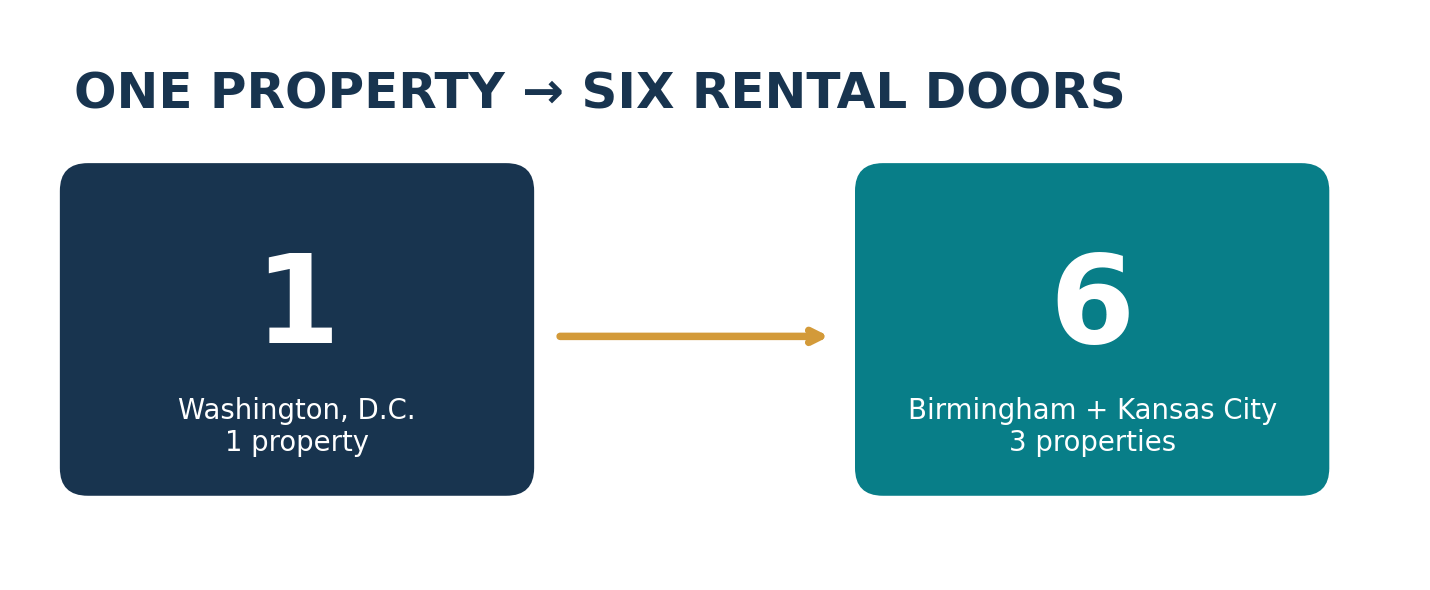
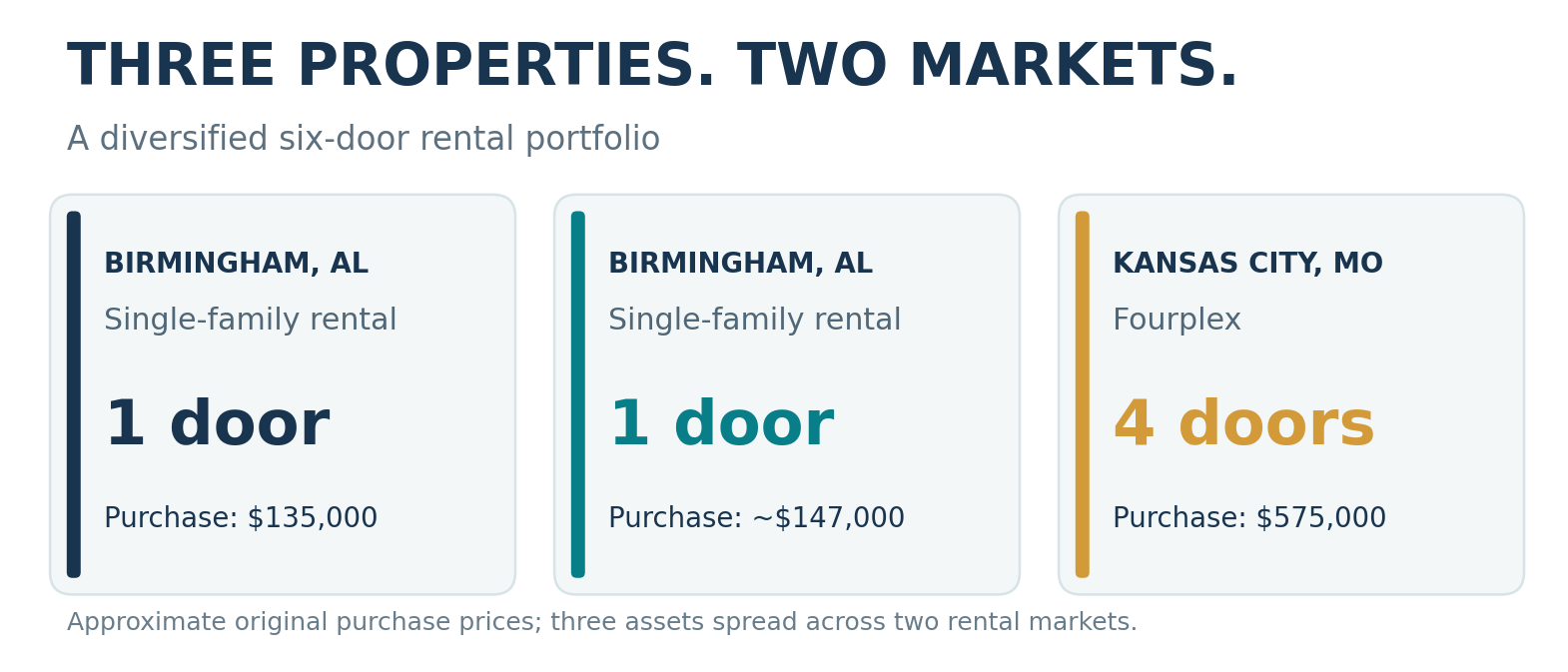
Rather than recognize the gain immediately, I arranged a Section 1031 exchange. Using relationships built through REI Concierge, I pursued two single-family rentals in Birmingham, Alabama—approximately $135,000 and $147,000—and a fourplex in Kansas City, Missouri, for $575,000. The total acquisition price was approximately $857,000. One D.C. rental unit became six rental units across three properties in two different states.
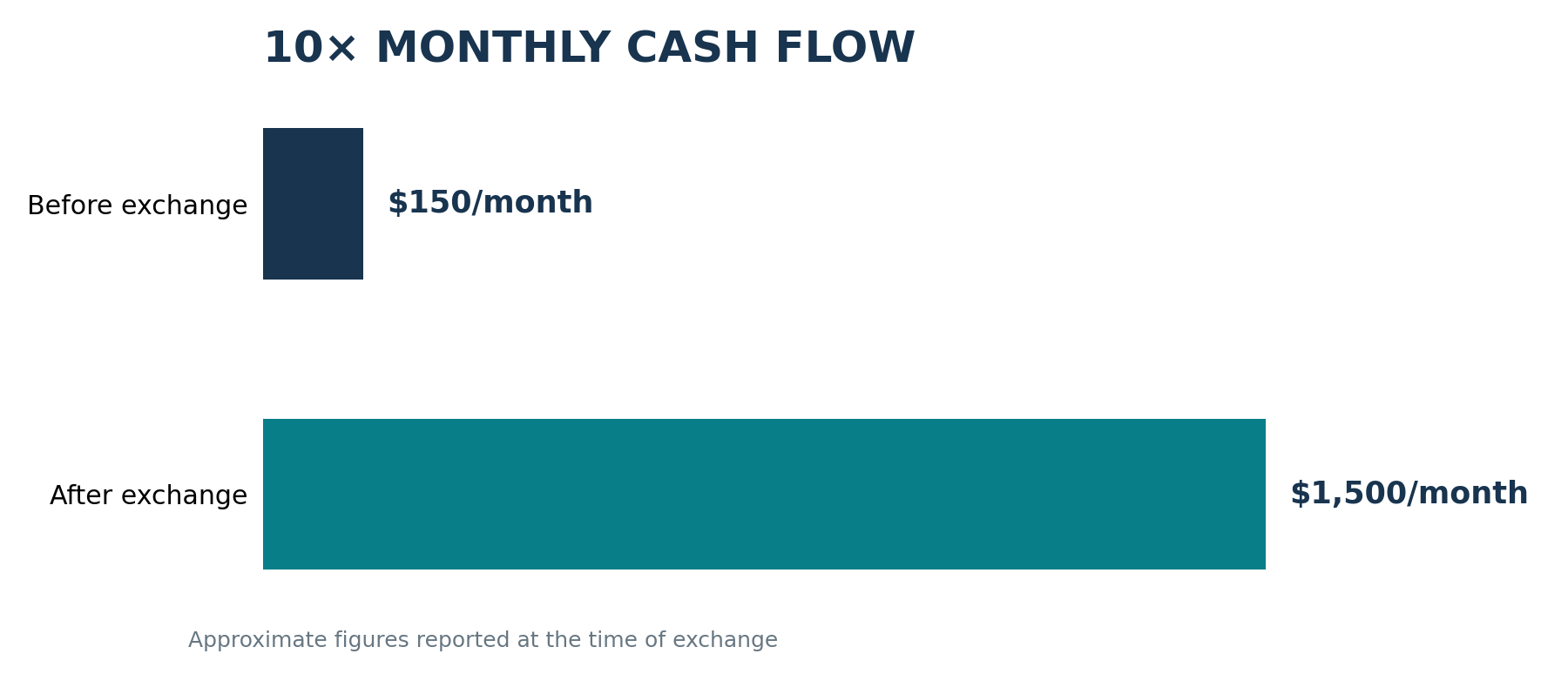
Our reported monthly cash flow increased from approximately $150 to $1,500—a tenfold improvement, or roughly $16,200 more per year. We used exchange proceeds and investment-property financing, without contributing new personal cash. That doesn't mean the transaction was free: closing costs, lender requirements, and debt and equity calculations all mattered. It means we redirected existing equity toward a different investment objective.
A 1031 exchange generally allows an owner to defer recognition of gain when selling qualifying investment or business real estate and acquiring other qualifying U.S. real estate. It isn't a tax exemption. A qualified intermediary typically must hold the proceeds; receiving them personally can disqualify the exchange. After the sale, investors generally have 45 calendar days to identify replacement properties and 180 days to complete the acquisition, subject to an earlier tax-return deadline. The 45 days are included within the 180. A common identification rule permits up to three identified properties regardless of value. To fully defer gain, investors generally aim to buy replacement property of equal or greater value, reinvest all net exchange equity, and address any debt relief so that cash or other taxable 'boot' is not received. Specific financing and tax outcomes require professional review. Non-owner-occupied financing often involves down payments around 20–25%, but this is a lender convention, not a 1031 rule.
I also stopped depending on a single house in a single market. Our new portfolio had exposure to Kansas City and Birmingham, with different tenant pools and local economic drivers. This resembles the logic of diversification in an investment portfolio, though rental real estate is far less liquid than an index fund. More properties also bring more maintenance, management, and vacancy risk. The strategy worked for my goals because the added complexity came with a meaningful increase in income.
Based on later estimates, the Kansas City fourplex rose from $575,000 to about $668,000; the Birmingham homes were estimated at $142,000 and $152,000. Together, that's approximately $105,000 in estimated appreciation above the combined purchase prices. Those estimates aren't realized gains or appraisals, and future values can fall. Still, they illustrate that pursuing cash flow doesn't require abandoning the possibility of appreciation.
A good investment is not necessarily the right investment forever. When your priorities shift from building equity to producing income—or vice versa—your portfolio may need to shift too. For us, a properly structured exchange helped turn one underperforming cash-flow asset into a more income-oriented, geographically diversified portfolio. Before selling, model after-expense cash flow, replacement financing, transaction costs, taxes, and management demands. Then decide whether your equity could work harder elsewhere.
Thinking about repositioning your investment property?
Stateside Residential helps DMV owners evaluate investment real estate decisions and connect their next move to their longer-term goals.
Educational case study, not tax, legal, or investment advice. Figures are owner-reported estimates; dates, closing statements, and property valuations should be verified before publication. Consult a CPA, qualified intermediary, lender, and attorney for exchange-specific guidance.
Get assistance in determining current property value, crafting a competitive offer, writing and negotiating a contract, and much more. Contact us today.